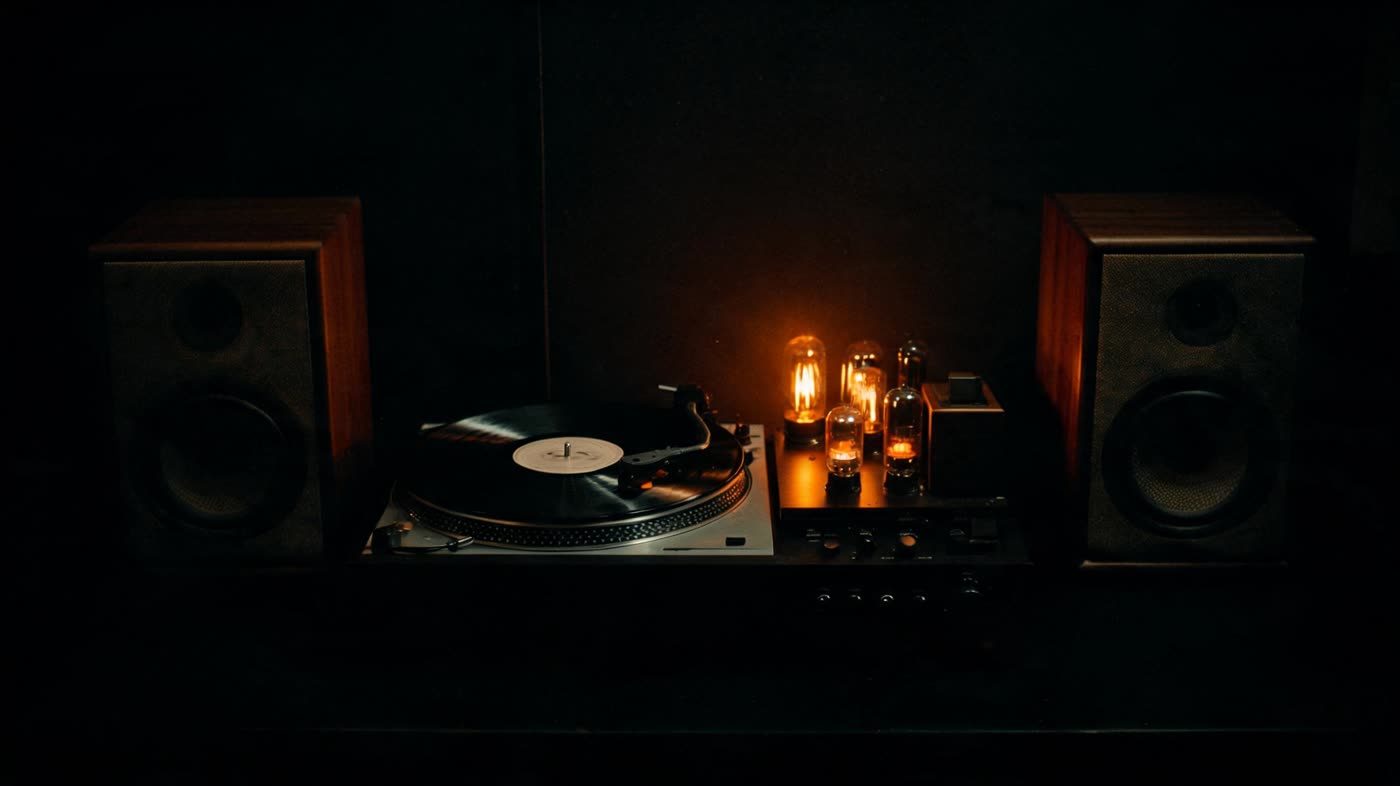
The quality sound system trend is having a moment on TikTok right now and I am obligated, morally, professionally, as someone who spends large portions of her life inside headphones, to weigh in. Not because I'm a gear snob. I'm the opposite of a gear snob actually. But because the question of how you hear music matters more than almost any other audio decision you'll make and most people don't treat it that way until they hear something on good speakers and can't go back.
Let me tell you about the first time I heard a track I'd been working on through a real set of studio monitors. I had been mixing on laptop speakers, which yes I know, and then I borrowed time at a friend's setup and played it back through actual nearfields. The low end I thought I'd managed was a disaster. The hi-hat I'd thought was fine was competing with a frequency in the guitar that I couldn't hear at all on laptop speakers. The whole thing was both worse and more fixable than I'd realized. And I understood in a visceral way that I had been hearing ABOUT my music instead of hearing it.
That's the distinction I want to drill into. Hearing about music versus hearing it. Let's go.
What Bad Speakers Are Actually Doing to You
When you listen through poor-quality speakers, laptop speakers, cheap earbuds, a ten-dollar Bluetooth thing that rattles when the bass hits, you're getting a summary of the music. You're getting the dominant frequencies, the loudest elements, the basic shape of the thing. You're hearing the argument, not the evidence. The texture, the space, the low-end movement, the subtle decay on a reverb, the specific character of a room, all of that either disappears or gets misrepresented.
For casual listening this matters because the music you think you love sounds different than it actually is. The albums you've heard a hundred times have things in them you have genuinely never heard. I'm not being dramatic. Put on something you know well through a decent pair of open-back headphones or a real set of bookshelf speakers and I promise you will hear at least three things in the first song that you didn't know existed.
For making music this is catastrophic. You cannot mix what you cannot hear. You cannot hear what your speakers aren't reproducing. The number of indie recordings that have low-end problems, or that sound weirdly small, or that collapse when they're played on anything other than the exact speakers they were mixed on, a huge percentage of that is people working on systems that were lying to them the whole time. I made that mistake. I made it for a couple of years actually, before I stopped.
The Budget Reality and What Actually Matters
Okay so here's where I try to be useful rather than just righteous. Because "get a quality sound system" is obvious advice that doesn't help if you're working with limited funds, which most indie musicians and most people are.
The good news is that the threshold for genuinely better is not as expensive as the gear-enthusiast community would have you believe. There's a real audio industry incentive to convince you that you need to spend a lot of money and you don't, necessarily. What you need is to spend money on the right things.
If you're just a listener and not making music: a pair of decent wired headphones is the highest-value upgrade you can make. You don't need wireless, you don't need noise-canceling for home listening (it changes the sound character in ways that are not always better), you don't need flagship. Mid-range open-back headphones from reputable brands, you can get something genuinely excellent for sixty to a hundred dollars used, will transform what you hear. The open-back thing matters because they have a more natural, spacious sound than closed-back, air can move around the driver freely. They leak sound so they're for home use but at home they're dramatically better.
If you're also a room listener and want speakers: a pair of powered bookshelf speakers in the hundred-fifty to three-hundred dollar range is not a compromise. That tier exists and it's real and it's sufficient for most uses. Position them correctly, equilateral triangle with your listening position, ears at tweeter height, not shoved into corners, and they will tell you the truth about what you're playing.
If you're recording and mixing: you need studio monitors specifically, not just any speakers, because studio monitors are designed to have a flat frequency response rather than a hyped one. Consumer speakers are often tuned to make things sound exciting, emphasized bass, emphasized highs. That sounds good for listening but it lies to you when you're mixing because what sounds balanced on hyped speakers sounds thin and tinny everywhere else. Entry-level studio monitors exist and they're sufficient when you're starting out. The brand name matters less than getting something with a reasonably flat response and positioning it correctly.
What I Actually Use (The Honest Version)
I should be transparent because I have opinions and I'm also not a professional studio engineer. I'm a musician who learned to produce out of necessity because I couldn't afford to pay someone else to do it every time.
I track and mix in what is generously described as a "studio" and more accurately described as a large closet. The room treatment is a combination of things I bought and things I rigged. There are acoustic panels on the walls, a bunch of thick blankets doing additional duty, and a rug that is doing more work than it knows. It's not perfect. There is no perfect room in an apartment. But it's honest enough that what I hear in there translates reasonably well to other systems, which is ultimately the test.
I work primarily on headphones for the first pass of a mix and then check on the monitors and then check on my laptop speakers specifically to see where it falls apart, because if your mix still sounds acceptable on laptop speakers you've done something right. They're a useful final-pass torture test rather than a primary mixing environment. I've learned to use them as a reference point rather than a main system.
The specific gear matters less than the calibration, knowing the quirks of your system, knowing what it exaggerates and what it hides, adjusting for that consciously. Every system lies a little. The goal is knowing exactly how yours lies so you can account for it.
The Part Where I Get a Little Evangelical About It
I want to end with this because it's the thing that motivates me more than the technical stuff. Music is meant to be heard. Not summarized, not compressed into a little Bluetooth pill, not experienced as a background texture while you do other things. Actually heard, with attention, on something that's telling you the truth about it.
I'm in the middle of making a record and every day I'm making decisions about what goes in and what comes out, what gets layered and what gets stripped, where the quiet lives and where the loud lives. Those decisions exist. They're in there. And most of the time most listeners will hear them through earbuds on their phone and catch maybe seventy percent of what I put in and I've made my peace with that because that's just reality.
But the thirty percent that disappears, the breath before a line, the way the room feels in a specific reverb choice, the low-end movement in a quiet passage, that stuff is real and it's there and it's part of the work. And when you hear it through a system that actually resolves it, something in you responds to it even if you can't articulate why. You just feel more of the music. You feel more of the person who made it.
That's worth something. It's worth sixty dollars for a decent used pair of headphones, at minimum. come on. You owe it to yourself and to every musician who spent hours making sure that detail was right.
Now go listen to something you love on the best system you can manage and tell me what you hear that you didn't know was there. I genuinely want to know.
One practical footnote: if you're going the headphone route and you're overwhelmed by options, the simplest filter is this, look for a wired pair with a 32-ohm or higher impedance rating and avoid anything that markets itself primarily on bass response. Bass-hyped headphones are designed for a consumer experience, not an honest one. They sound exciting at first and they lie to you over time. What you want is something that sounds slightly flat, slightly unremarkable at first listen, because that flatness is accuracy. Your ears will calibrate and you'll start hearing what's actually in the music rather than what the headphones have decided to emphasize. That adjustment period is worth it. On the other side of it every piece of music you've ever loved gets a second first impression. That's a gift worth sixty dollars.