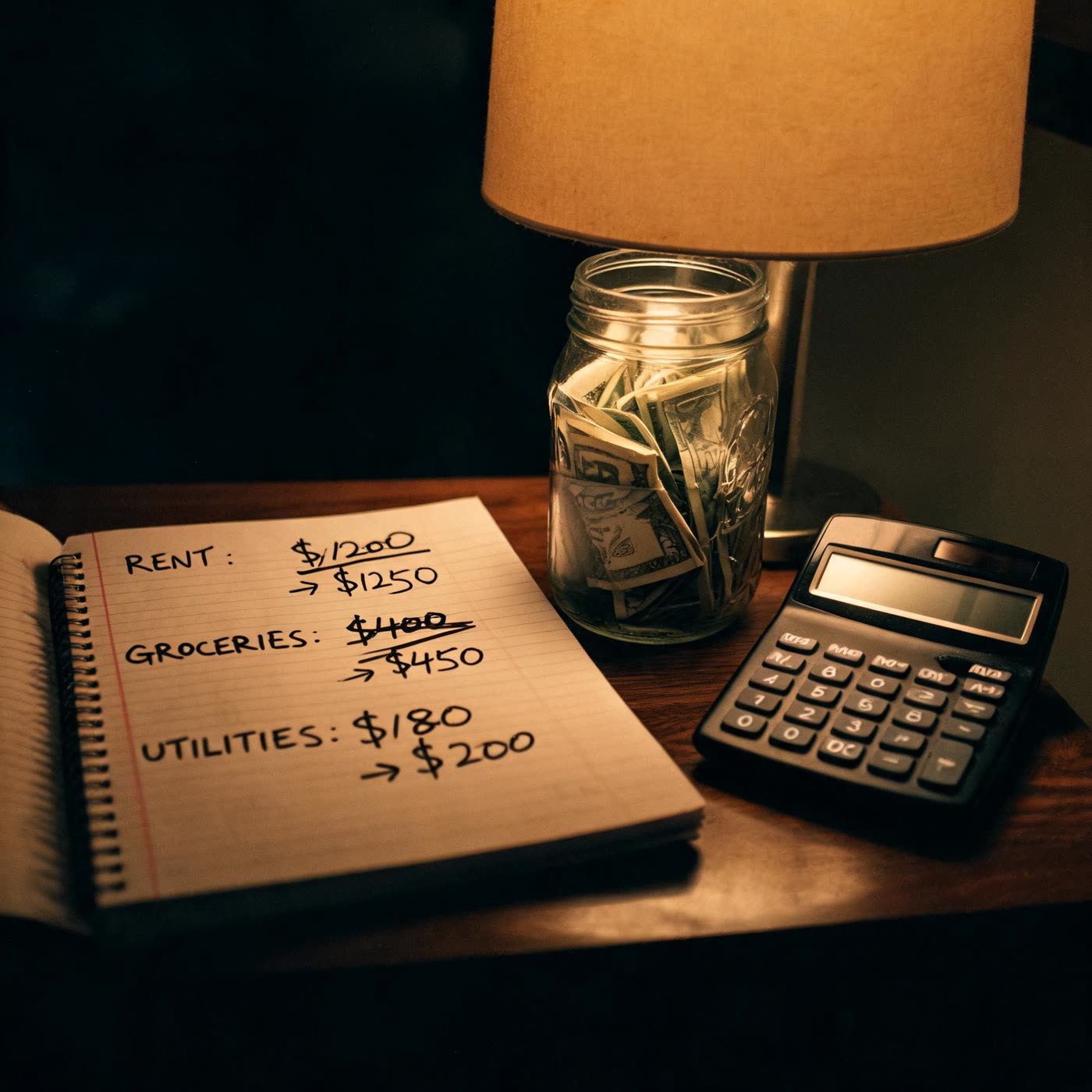
The "financially independent" content is all over TikTok right now, the girlies calculating their runway, the "I have a six-month emergency fund" posts, the women posting their savings milestones like the victories they actually are, and I have been deep in this content for weeks because it hits something specific in me that I haven't seen a lot of people name directly. So let me name it.
Financial independence, for women who grew up in certain religious contexts, is not just a practical achievement. It is a theological one. Because the theology we were given had a very clear answer to the question of who provides: a husband. Ideally one you'd found before your mid-twenties, definitely one who was the "spiritual head of the household," and through him you'd be taken care of. Your job was to be worth providing for. His job was to provide.
I was told this, explicitly and implicitly, from approximately age twelve until I left my hometown. I was told it was the design. I was told it was love. I was told it was security. I was not told that it was also, structurally, a perfect mechanism for making sure women stayed dependent.
I built my own ledger instead. Here's how that went and what I think about it now.
What "Be Provided For" Actually Meant in Practice
I want to be fair here: plenty of couples operate on a "one earner or primary earner" model and it's genuinely mutual and loving and works for them. That's not what I'm talking about. I'm talking about the specific ideological package that came attached, in my church context, to the concept of female financial dependence.
The package included: women who were too independent were a red flag, because independence suggested you weren't going to be submissive. Girls who were ambitious about careers were cautioned about putting their ambitions above their "calling," marriage and family. Financial independence for women was fine temporarily, before marriage, but the goal was always to not need it. Your salary was gap coverage, not a life plan.
I had one youth leader who meant well and said something I still think about: "You want a man who can provide, sweetheart, not a situation where you have to." She was trying to tell me to have standards. But what she was actually encoding was: your financial self-sufficiency is a holding pattern, not an identity. It's what you do until someone comes along to replace it with the real thing.
The problem with that framing, beyond the obvious, is that it trains you to not take your own financial life seriously. Why build skills, negotiate, save aggressively, invest? For what? You're being provided for, or you're waiting to be. Your own money is transitional. And if you've absorbed that message and then the person providing disappears, through divorce, death, abandonment, just not materializing at all, you're not just alone. You're without the scaffolding you were supposed to be building all along.
The Broke Years Were Actually Important
I'm not going to romanticize being broke. It was stressful, it limited choices, it meant saying no to things I wanted to say yes to. When I moved to the city to do music seriously I had almost nothing. I was taking whatever work I could get that left me enough hours to write and record. There were months where I was doing the math on whether I could afford both groceries and an interface cable.
But those years were the years I actually learned about money. Not from a book, I'm not someone who had a mentor who sat down and explained compound interest, but from direct, painful contact with the consequences of not understanding it. I learned what it felt like to have zero buffer. I learned what even a small emergency fund changed about my anxiety levels. I learned that the gap between "not broke" and "actually stable" is not just income, it's structure.
I also learned, and this one took longer, that my income was mine. Not a placeholder. Not a gap-filler. Mine. The money I made from a gig, from licensing a song, from some scrappy merch sales, that was the product of my work and my work was real and the money it generated was not waiting to be superseded by someone else's provision. It was the ledger I was building. Line by line.
There is something specifically, stubbornly satisfying about that that I didn't have words for until I was a few years into it. It's the feeling of your own life being yours. Of no one holding the financial access in your relationship as leverage, deliberately or not. Of making a choice, where to live, what work to take or turn down, how to spend a day, based on your own math rather than someone else's permission.
The Freedom Isn't Actually About the Money
Here's what I've figured out though: the financial independence is the mechanism, not the point. The point is freedom, specifically the freedom to make choices based on what you actually want rather than what your financial exposure requires you to accept.
For musicians this is EXTREMELY concrete. Do you know how many people I've watched compromise their creative choices because of financial dependency, either on a partner, on a label that owns them, on a day job they can't leave, on anything that has claims on their time and attention and energy in exchange for support? The dependency doesn't have to be a bad partner or a predatory label. It just has to exist. The dependency shapes the choices. Always.
When I say I'm financially independent I don't mean I'm rich. I'm definitely not rich. I mean that I have enough stability and enough ownership of my own income streams that I make creative decisions based on the work, not on which decision will let me eat next month. I turned down a licensing opportunity last year that would have paid well but required changes to a song I wasn't willing to make. I could turn it down because I could afford to. That's the whole thing. The money is what makes the NO possible.
I wrote a little about this on TikTok under the financially independent trend and the responses were mostly women, mostly women who'd also grown up in contexts where their financial self-sufficiency was framed as temporary or aspirationally not-needed, saying they recognized exactly what I was describing. The reclamation of your own money as your own thing, not as backup provision. That hit a nerve. I get it.
What I Want for Women Who Got the Same Message I Did
If you grew up with some version of what I grew up with, the theology or the cultural messaging that said your financial dependence was fine, expected, maybe even virtuous, I want to say something direct to you.
Your financial life is yours. Not a gap to be filled, not a temporary situation, not a thing that will be replaced by someone else's provision when you find the right person. Yours. And tending to it, knowing your numbers, building your buffer, owning what you can own, understanding what you earn and where it goes, is not masculine or unromantic or a sign that you've given up on partnership. It is the most fundamentally self-respecting thing you can do.
Partnership, real partnership, the kind worth having, does not require your financial vulnerability as an entrance condition. Anyone who needs you dependent is not giving you love. They're giving you an arrangement that benefits them.
I am nobody's wife. I am also not lonely, not unfulfilled, not waiting. I'm making a record. I'm building a ledger. I'm watching the "financially independent" TikToks and feeling that specific warm solidarity of women who figured out the same thing. That's a whole life. That's a good one, actually.
The final thing I'll say is about the loneliness question because it always comes up when I talk about this stuff, the implicit assumption that a woman who's prioritizing financial independence and autonomy must be trading something important for it. Must be protecting herself from intimacy, must have given up on partnership, must be building walls with her spreadsheets. I'm not going to dignify that framework too much because I think it's mostly projection from people who are scared that their own arrangement doesn't hold up to scrutiny. But I will say: financial independence is not a substitute for connection and was never intended to be. It's a foundation. What you build on it is up to you. I want connection, I want closeness, I want to love people and be loved by them. I just refuse to make my financial vulnerability the price of admission. That's not a wall. That's a floor that belongs to me. There's a difference. I'd argue it's the more loving posture actually, showing up to connection from a place of choice rather than need, wanting rather than requiring, present because you want to be rather than because you can't afford not to be. That's the kind of relationship worth having. That's what the ledger is for.