"Viral things to buy" is one of the biggest search trends running through TikTok right now and I've been posting about it because I have Opinions, and because I have spent real money on things based on viral recommendations and have feelings about those purchases that range from "this changed my life" to "this object is a direct insult to my intelligence and my bank account."
My specific context, for the purposes of this list: I am an indie musician living in a city apartment. I record at home. I make TikTok content from my home studio. I have a budget that was, for a long time, very thin, and is now merely modest, which means I've had to be extremely practical about what I buy and what I don't. I cannot afford to accumulate landfill candidates. Every purchase has to justify its square footage in a small apartment and its drain on resources that are more accurately described as "finite" than "comfortable."
That context is my filter. Here is my list, tested by actual use in actual life conditions, which are somewhat extreme on the "things get used hard in a small space" axis.
Things That Actually Survived and Earned Their Place
The thrift-store floor lamp I've already written about in my lighting post, Gerald, my primary camera light, but it deserves a mention here as the best thirty-two-dollar purchase I've made in years. I'm counting it as a viral purchase because the wisdom of "get a good lamp for video lighting" is absolutely circulating in creator communities. It is valid. It works. Do this.
A good pair of basic over-ear headphones for mixing reference. Not the most expensive ones, not the trend-chasing audiophile choice, but a pair with a reasonably flat response that lets you hear what your recording actually sounds like instead of the enhanced version that the fun headphones give you. I bought mine based on a recommendation from a musician on TikTok who was being very specific about what "flat response" means and why it matters for home recording. I've had them for about a year. I use them every single recording session. They have survived being worn for eight hours at a time, being knocked off the desk twice, and being used as an impromptu pillow once when I fell asleep at my desk at 3am. They're still good. Worth every cent.
A reusable silicone baking mat. Not a music purchase, a regular-life purchase, but I keep seeing it in viral lists and I want to confirm: yes. I bake when I'm procrastinating, stress-baking is a whole mode for me during hard recording sessions, and the silicone mat means I'm not throwing away parchment paper constantly. It cleans up easily. It doesn't stick. I've had mine for eight months. It's fine. It does exactly what it says and nothing more, which is the ideal consumer product.
A small whiteboard mounted on the wall of my studio. I saw someone recommend this for songwriters as a lyrics-and-structure planning tool and I was skeptical because it seemed like something that would get written on once and ignored. I was wrong. I use it constantly. Song structures live there while I'm figuring them out, I can see the whole architecture of a track from across the room, mark sections, redraw the bridge, erase the whole thing and start over without wasting paper. The impermanence is the feature, not a bug. The notes in the notebook are for keeping. The whiteboard is for thinking. Different tools, different purposes.
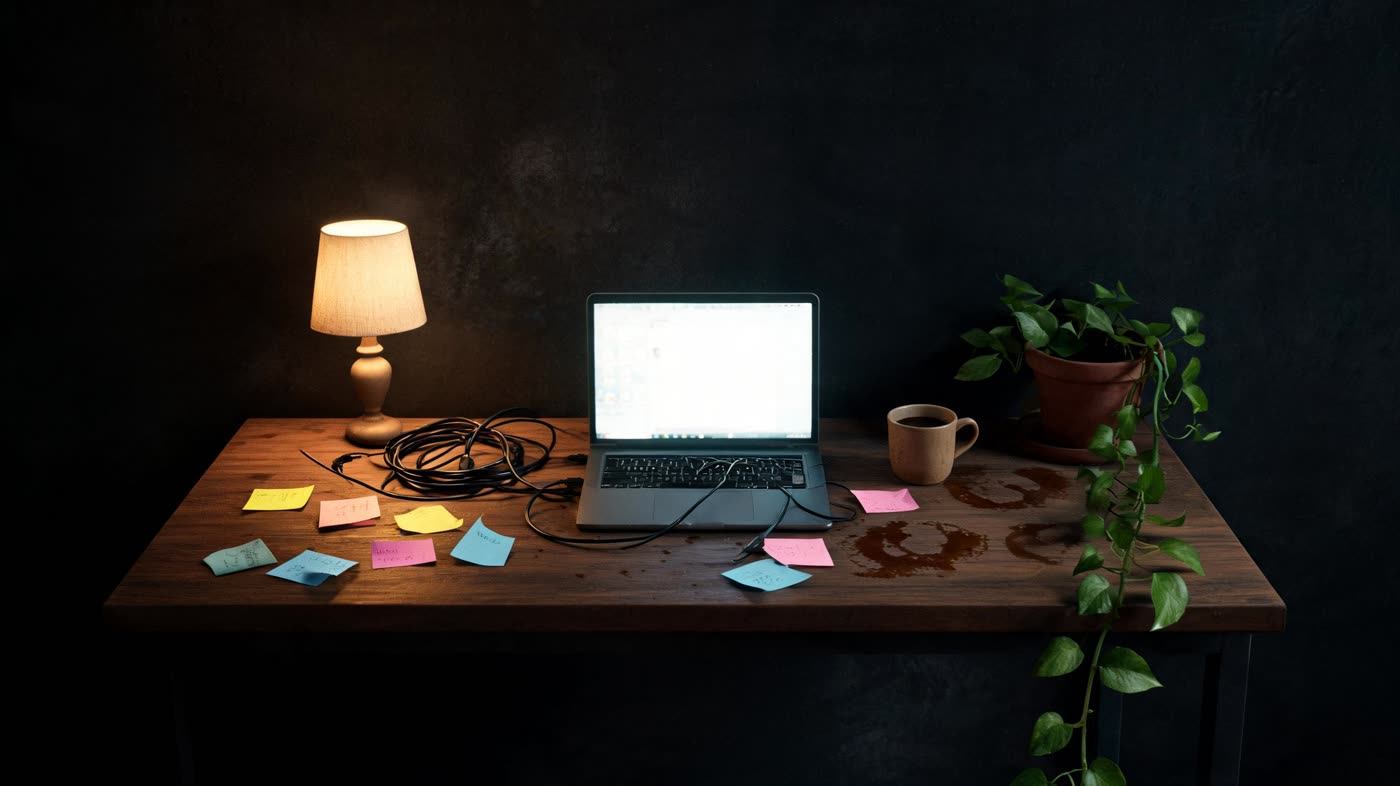
A simple cable management system for my desk. Aggressively unglamorous and I'm including it anyway because recording cable chaos is genuinely a productivity problem. I spent maybe fifteen dollars on cable ties and a couple of adhesive cord clips. The cables in my studio now go where they go and stay there. I stopped losing an hour a week to "wait which cable is this." This is the most boring item on this list and it has improved my life more than most things that are more interesting.
Things That Were a Mistake and I'm Confessing It
I have to be honest about the failures or this list is useless.
A tiny portable humidifier that went viral for allegedly being great for vocal health. The theory is sound, dry air is genuinely not ideal for singers and recording vocalists. The execution of this specific product was: loud in a way that read on the microphone, required cleaning more often than I cleaned it, and then developed a mold situation that I do not want to think about too deeply. I bought it because it was cute and small and the TikTok made it look quiet. It was not quiet. It was a liability. I threw it out and now I just run a bowl of water near the radiator in winter like a person from 1987 and it works fine.
A "posture corrector" harness thing that was absolutely everywhere for a while. I have bad posture from years of hunching over a guitar and a desk. I thought this would help. What it did was make me slightly uncomfortable all day in a way that made me take it off after twenty minutes every time I put it on. The posture did not improve. The discomfort did not produce compliance. I donated it after six weeks and accepted that if I want better posture I will have to do it through actual habits and not through wearing an uncomfortable harness while I work.
An elaborate LED light system for my studio. I saw other creators with cool colored lighting and thought it would be good for content and also atmosphere. It was a pain to set up, used more wall outlets than I had, kept defaulting to a disco mode I didn't want when the app crashed, and the aesthetic turned out to be "my room looks like a nightclub but it's 10am and I'm trying to write a sad song." I replaced them with Gerald and one warm-toned lamp I already owned and the result was better for both content and mood.
A "smart" water bottle that tracked my hydration and connected to an app. Listen. I know. I bought it. It's not that it didn't work, it worked fine, it's that the app needed updates constantly and sent me notifications reminding me to drink water that were so frequent and annoying that I turned off the notifications, at which point it was just a water bottle that cost me four times as much as a regular water bottle. I have a regular water bottle now. I drink water from it. The hydration situation is identical.
The BS Filter I Apply Before Buying
After accumulating enough of these experiences I've started running viral product recommendations through a set of questions before I click purchase. Sharing them because they've saved me money.
Does this solve an actual problem I have, or a problem I've been convinced to have by watching the product video? This is the most important question. Clever product marketing creates the problem and the solution in the same thirty-second clip. You didn't know your cable situation was a problem before you watched the cable organizer video, but now you do. Sometimes the problem was real and you just hadn't named it. Sometimes the problem is a manufactured anxiety and the solution is unnecessary. Ask yourself: did I feel this need before I watched this video?
How many steps between purchase and regular use? The more steps there are, the less likely it is to integrate into your actual life. The posture corrector required me to put it on every morning and feel uncomfortable all day. That's a lot of steps and a lot of cost. The cable ties required me to spend one afternoon and then they were done. Permanent solutions beat daily disciplines for things I'm not deeply motivated about.
Is the price a red flag in either direction? Very cheap things that go viral are almost always low quality at the source, the viral moment is often marketing, not discovery. Very expensive things that go viral as "worth it" are sometimes worth it and sometimes just expensive. The sweet spot for quality-to-value in the viral product space is usually mid-range: something that costs real money but not extravagant money, made by a company whose core business is actually making that product.
And the most important one: has someone who uses it in conditions similar to mine, not a professional creator with a production budget, not an influencer for whom the product was free, actually recommended it based on sustained use? That's the signal I trust. The musician with a home studio who bought the headphones with their own money and used them for a year and is specifically describing what they're good for. That review is worth more than a hundred aspirational unboxings.
The "viral things to buy" trend is actually useful when it surfaces real recommendations from real users. The noise is from everything else. Learning to sort the signal from the noise is the skill, and it applies to TikTok product trends the same way it applies to everything else you're asked to want. You already have most of what you need. Buy the cable ties. Get a good lamp. Let the posture corrector go.