The #WhiskeyLovers community on TikTok is massive and I've been lurking in it for the better part of a year, learning things, also watching grown adults make it extremely clear that they would rather make someone feel stupid than help them discover something they love. The gatekeeping in whiskey spaces is its own special flavor of insufferable. It tastes like oak and condescension and I'm here to cut through it.
I came to whiskey late. Grew up in a dry-household evangelical home, my parents weren't harsh about it, it just wasn't a thing we did, and the church context made alcohol the vague province of Bad Choices. When I finally had a drink in my early twenties it was something sweet and not particularly interesting. Whiskey came later, in my mid-twenties, at the end of a bar in a city I'd just moved to, alone with my notebook, waiting for a set to start.
The bartender, I want to find this person and send them a thank you card, handed me a small pour of bourbon without me asking for anything specific, said "try this," and didn't tell me what to do with it. I just tasted it. It was warm and sweet and smoky and it tasted like something I'd been waiting to discover. I've been in it ever since. Here's what I know now that I wish someone had told me then.
The Categories: What the Styles Actually Mean
Whiskey is a family of spirits, and like all families, they don't always look alike. Here are the main branches you're likely to encounter and what makes each distinct.
Bourbon is American, made primarily from corn (at least 51%), aged in new charred oak barrels. The new-barrel rule is why bourbon tends to be sweeter and vanillier than other styles. New oak gives generously. It's got to be made in the US. Kentucky makes the most famous stuff, but you can make bourbon anywhere in the country.
Tennessee whiskey is basically bourbon with an extra step: the spirit is filtered through sugar maple charcoal before aging, a process called the Lincoln County Process. This smooths it out. The big names here are well-known. It's an approachable style for beginners.
Rye whiskey is made primarily from rye grain (at least 51%). It's drier and spicier than bourbon, with pepper and grain notes that cut through in a way that some people love immediately and some people need to grow into. If you find bourbon too sweet, rye might be your thing.
Scotch is made in Scotland, primarily from malted barley, aged a minimum of three years. There are regions (Highland, Lowland, Speyside, Islay) that produce distinctly different styles. Islay whiskies (note: Scotch is spelled without the "e") are famously peaty and smoky. Speyside tends toward fruity and floral. If you've ever been told "Scotch is an acquired taste," they probably handed you something from Islay, which is a very specific and intense experience. Start somewhere gentler.
Irish whiskey is typically triple-distilled, which makes it smoother than Scotch. The "e" is back: Irish whiskey. It's often the easiest entry point for people who are nervous about whiskey in general. Light, accessible, genuinely pleasant.
Japanese whisky (no "e") has become a phenomenon over the past couple of decades. Heavily influenced by Scotch technique, Japanese distillers took the category and ran with it in their own direction, precision, balance, subtlety. Some of the most celebrated bottles in the world right now are Japanese. They are also expensive and harder to find. Worth seeking out once you've got your bearings.
How to Actually Order Without Performing
This is the part people stress about and shouldn't. Here's the framework.
If you're new, say you're new. A good bartender, and there are many, is going to light up when you say "I'm just getting into whiskey, what would you recommend for someone starting out?" That's an invitation to share something they love. Bad bartenders will make you feel stupid. Find different bars.
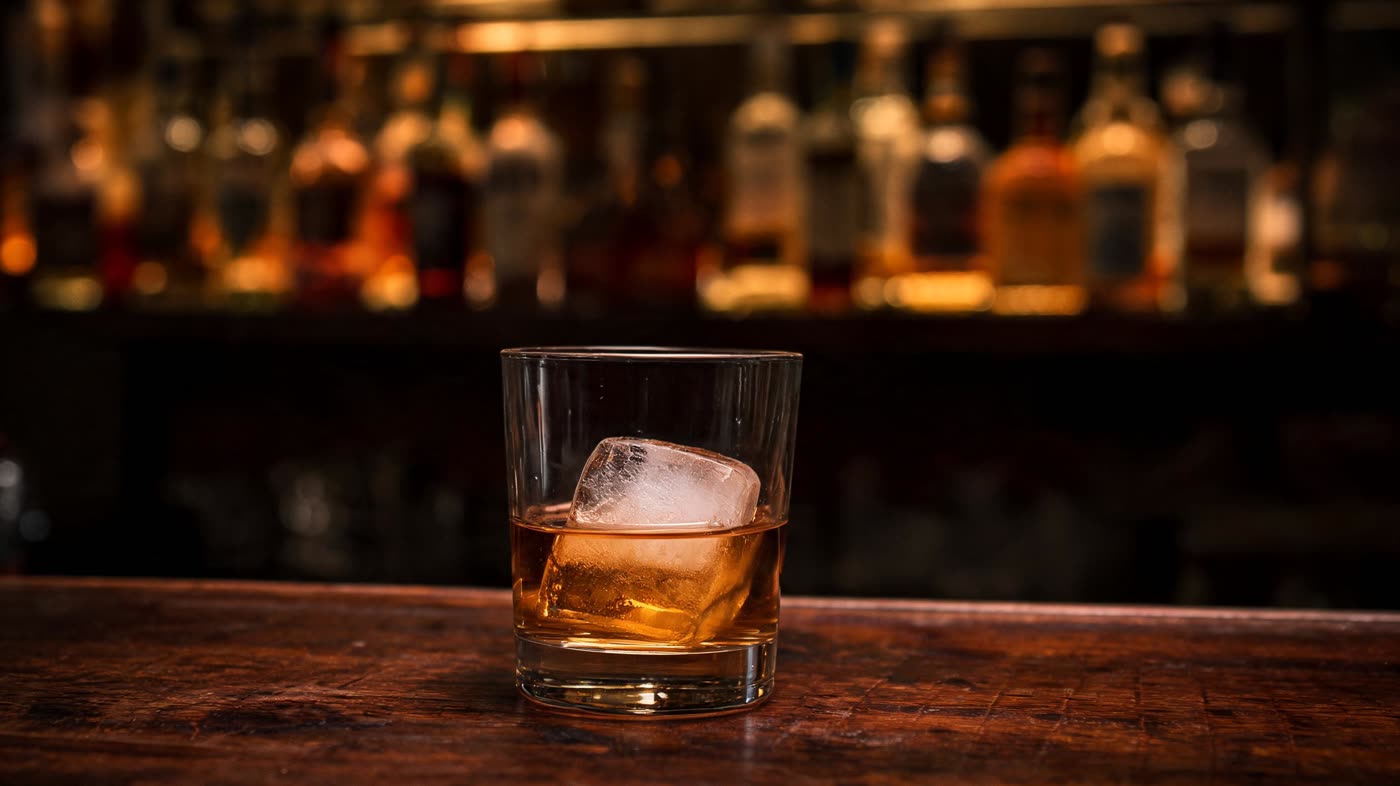
Start with something neat in a small pour if you can handle it, or on the rocks if you need the cold. "Neat" means no ice, no water, nothing. Room temperature. This is the best way to understand what you're actually tasting. Ice numbs some of the character. Not bad, sometimes great, but if you want to learn, neat is cleaner.
You don't have to love it immediately. Whiskey is an acquired taste in the sense that your palate genuinely adapts over time. The things that feel harsh at first become interesting. The heat becomes warmth. What initially seems complicated becomes legible. Give yourself time.
You do not have to drink it the "right" way. Whiskey and ginger ale is a perfectly legitimate drink. Whiskey in coffee is a legitimate drink. If you buy an expensive bottle and you want to put it in a Coke because that's what makes you happy, it's your bottle. Anyone who tells you that you're ruining it can mind their own drink.
What to Actually Taste For
Tasting notes exist to communicate, not to gatekeep. When someone says a whiskey tastes like "vanilla and caramel with a hint of dried fruit on the finish," they're not being pretentious. They're describing real aromatic compounds that your nose can actually detect once you know to look for them. The vocabulary is useful. The condescension that sometimes comes with it is not.
Here's how I learned to actually taste: three steps, every time.
Nose first. Bring the glass close, breathe gently. Don't sniff aggressively or you'll just smell alcohol. What's underneath? Sweet things (vanilla, caramel, honey, fruit). Grain things (bread, cereal, corn). Spice (pepper, cinnamon, clove). Smoke, if it's there. Earth, wood, leather. You're not going to catch all of these at once when you're new. Pick one thing that stands out and name it for yourself. That's the start.
Then taste. Let it sit on the front of your tongue first, then move it around. The "palate" develops over the mid-sip. You'll notice the sweetness, the body, where the flavors land. Then swallow and notice the finish, what lingers, how long, whether it warms you or fades quickly. A long finish is generally considered a good thing. It means there's something still worth paying attention to.
Add a drop of water to higher-proof bottles, anything above about 50% ABV, and see how it changes. This isn't weakness. Water opens up aromatic compounds. Actual whiskey professionals do this. It's a tool, not a concession.
The Gatekeeping and Why I Have No Patience For It
I want to spend a minute on the whiskey snob phenomenon because it maps onto something I've seen in a lot of spaces I inhabit, music, books, food, and it's always the same dynamic. Someone discovered something good, the discovery made them feel special, and they've decided that controlling access to the specialness is part of the pleasure now. "You wouldn't understand" is always about the speaker's ego, never about the thing itself.
Whiskey is fermented grain that got put in a barrel. It is a genuinely wonderful thing. It is also not a personality, not an intelligence test, and not a membership badge. The person who just had their first sip is having a real experience. The fact that they don't know the difference between a single malt and a blended Scotch yet doesn't make their experience lesser. It makes it a beginning.
I grew up in a context where a lot of things were used as membership tests. Theological knowledge, Sunday attendance, behavior codes. And the underlying function was always the same: to create an in-group that feels elevated by the existence of an out-group. I have zero tolerance for that mechanism in any context, including at a bar.
Respect the pour. That's real. Whiskey is labor-intensive to make, the craft matters, the producers deserve respect. But the person drinking it doesn't need to earn a credential first. Just drink it. Ask questions. Say "I don't know." Learn at your own pace.
I'm still learning. I have a small collection of bottles that I'm working through slowly. I have an ongoing love affair with a particular bourbon that I'm not going to name because the minute I do someone will tell me it's basic. it's not basic to me. It's the thing I pour when I want to sit in the secondhand chair after a long session and just breathe for a minute. That's what it's for. That's enough.
Whatever gets you to the end of the bar with a glass in your hand and something warm in your chest, that's the right whiskey. Start there.
A Few Specific Suggestions for the Genuinely Curious
Since I've told you how to approach it and given you the framework, let me also give you a handful of actual starting points. Not brand endorsements, just styles and expressions that I've found work well as on-ramps for people who are new to this.
For bourbon beginners: look for something labeled "wheated." Wheated bourbons use wheat instead of rye in the grain bill and tend to be softer, sweeter, more approachable. They're a gentler introduction than a high-rye expression. Ask your bartender or the person at a good liquor store for a wheated recommendation and see how you do.
For people nervous about whiskey altogether: start with Irish. The triple distillation process genuinely makes it smoother than most other styles. It's not simple, there's complexity there if you look for it, but the entry barrier is low. Drink it neat with a small splash of water if you want to open it up, or on a large ice cube if you want to slow the experience down.
For people who want to try something more complex: a Speyside Scotch, not an Islay. The Speyside region tends toward orchard fruit, a little honey, vanilla, gentle spice. It's a step up in complexity from bourbon or Irish but not the full peat-bomb experience that can put people off Scotch entirely. Take your time with it. Let it breathe in the glass for a few minutes before you nose it.
For adventurous palates who are already comfortable with the basics: Japanese whisky. Start with something blended rather than single malt. The blends tend to be more accessible price-wise and they're still extraordinary examples of the craft. The precision in Japanese distilling is genuinely distinct. You'll taste it.
That's the whole curriculum. Zero gatekeeping, full access. The bar is open. Come as you are.